MetLife Gets Match Ready What MetLife Stadium’s World Cup Changes Mean for Fans
MetLife Stadium is being reshaped for the 2026 FIFA World Cup, and the changes could affect more than what fans see on the field. The East Rutherford, New Jersey, venue is set to host eight World Cup matches, including the final on July 19. That role has made the stadium one of the tournament’s most closely watched venues.
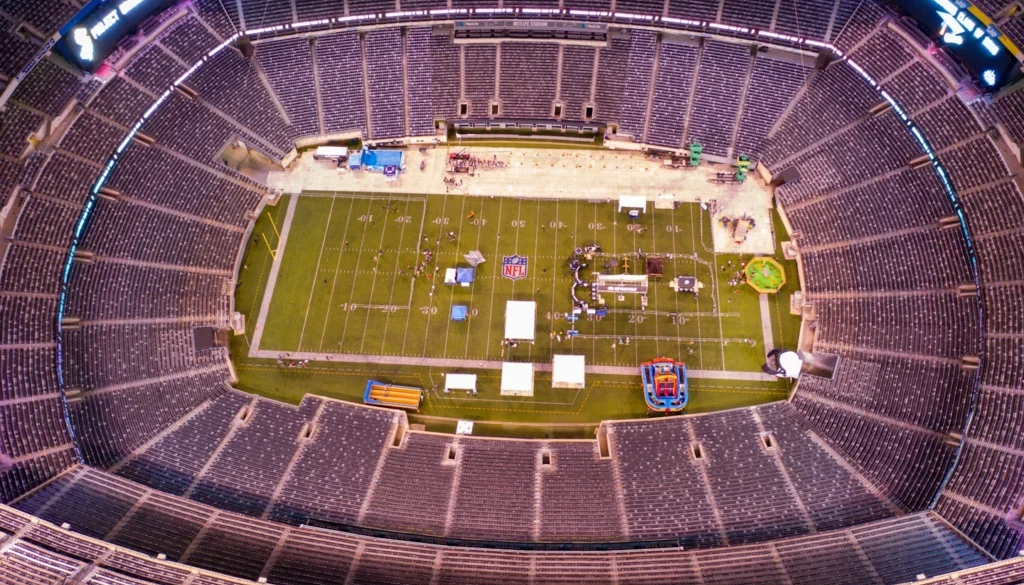
The most noticeable change is the playing surface. MetLife usually uses artificial turf, but World Cup matches will be played on natural grass. CBS Sports reported that installation began in early May, with Tahoma 31 Bermudagrass transported from North Carolina. Crews are also installing subsurface support systems, including sand layers, irrigation, and ventilation, to meet FIFA standards for elite international soccer.
The field itself also needs more room than a typical NFL game requires. The Associated Press reported that MetLife planned to remove 1,740 seats to widen the playing area for World Cup matches. FIFA’s field requirement is 75 by 115 yards, and the extra space is needed for the regulation pitch and corner-kick areas. It is a functional change, not just a visual one.
For fans, the practical impact will depend on where they sit and how they plan to get to the stadium. Not every ticket holder will be affected by the seating changes, but fans should not assume the World Cup layout will match a Giants or Jets seating chart. Sightlines, field-level areas, premium spaces, and entry patterns may all look different from those at a regular NFL event.
Transportation may be the bigger adjustment. The New York New Jersey Host Committee and NJ Transit said the matchday mobility plan is designed to move more than 78,000 spectators per match. Rail service is a major part of the plan, along with stadium shuttles, rideshare, permitted vehicles, and limited premium parking at American Dream. Officials said there will be no general spectator parking on stadium property on matchdays.
That means fans need to plan earlier than they might for a typical game. MetLife Stadium’s public transportation guidance states that fans must have a valid World Cup match ticket to purchase NJ Transit tickets to the stadium. They will also need both a match ticket and a transit ticket to receive the mandatory matchday wristband. Shuttle service is expected to run from selected transit hubs, with tickets purchased in advance.
Costs remain another detail to watch. Reuters reported that New Jersey reduced the World Cup round-trip public transit fare to MetLife Stadium from $150 to $105 in response to criticism. FIFA’s shuttle fare was listed at $80. For families and out-of-town visitors, those prices must be included in the overall matchday budget alongside tickets, lodging, food, and local transportation.
The changes are underway now because World Cup venues must meet FIFA requirements before matches begin. MetLife’s first scheduled game is on June 13, leaving limited time for stadium work, transportation planning, crowd management, and final fan guidance. The goal is to prepare a suburban sports complex to handle unusually large international crowds on a tight schedule.
Fans should watch for updates on ticketing instructions, final transit schedules, shuttle pickup details, bag rules, parking restrictions, and entry-gate guidance. For now, the safest approach is to plan around official transportation, buy required travel tickets early when available, and avoid assuming that a World Cup match will run like a typical NFL event.
References:
1. https://www.cbssports.com/soccer/news/fifas-engineering-world-cup-pitch-metlife-stadium-north-america/
2. https://www.njtransit.com/press-releases/fifa-world-cup-2026tm-new-york-new-jersey-host-committee-and-nj-transit-announce
3. https://www.reuters.com/sports/soccer/new-jersey-reduces-world-cup-public-transit-fare-105-2026-05-07/
4. https://www.metlifestadium.com/getting-here/public-transportation
5. https://apnews.com/article/2026-world-cup-final-metlife-ce438f7da8b3f786ef59951e1c7d8de9